
Acetate Ribbon vs Satin : What Is Acetate Ribbon Normally Used For & What’s the Difference?
If you’ve ever shopped for decorative ribbon, you’ve likely encountered the terms “acetate ribbon” and “satin ribbon.” Maybe you’ve found yourself searching “is acetate ribbon the same as satin ribbon?” or “what is the difference between acetate and satin?” You’re not alone. These questions come up frequently among crafters, florists, gift wrap professionals, and wholesale buyers alike.
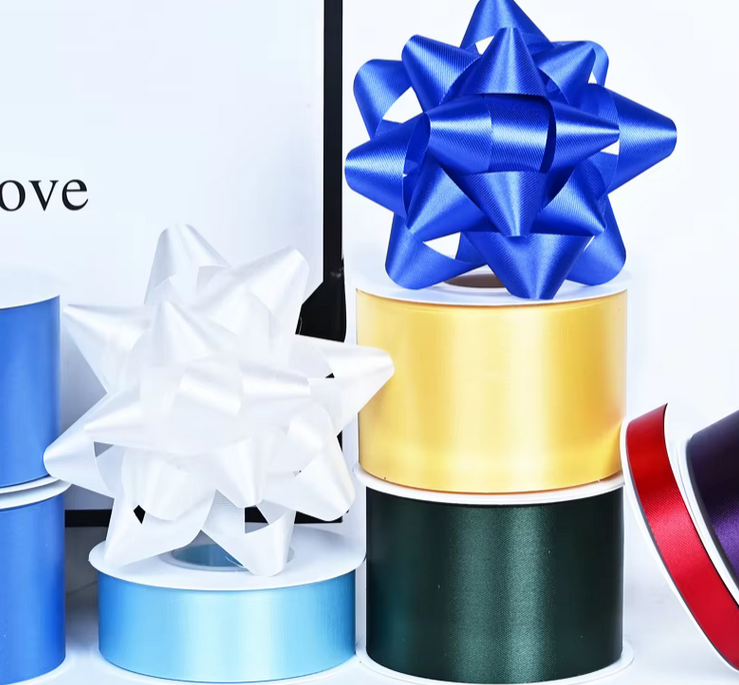
The short answer is: they are not the same. But they are closely related. In fact, many “acetate ribbons” are actually a specific type of satin ribbon—most commonly referred to as acetate satin ribbon. This article breaks down everything you need to know about acetate ribbon: what it is, how it’s made, what it’s used for, and how it stacks up against other types of satin ribbon.
What Is Acetate Ribbon?
Acetate ribbon is a decorative ribbon made from acetate fiber, a semi-synthetic material derived from renewable wood pulp. The manufacturing process begins with cellulose extracted from sustainably managed pine and eucalyptus trees. This cellulose undergoes an esterification process to become acetate yarn, which is then woven into fabric and cut into ribbon widths. This means acetate is fundamentally different from pure synthetics like polyester, which are petroleum-based.
One distinguishing feature of most acetate ribbons is their cut-edge finish. Unlike woven-edge ribbons that have finished, fabric-like selvedges, acetate ribbon is typically slit to width from a broad fabric. A hot knife blade simultaneously cuts and seals the edges, creating a smooth, fray-resistant finish. This heat-sealing process eliminates the need for woven selvedges and is what gives acetate ribbon its characteristic clean edge. Some suppliers use the term “acetate” to refer specifically to this cut-edge construction, which is why you’ll often see acetate ribbon described as “cut-edge ribbon” or “craft ribbon.”
There’s also a smaller category of woven acetate ribbon. Woven acetate is manufactured on narrow looms that produce the ribbon at its final width, resulting in woven selvedges along both edges. This construction method is generally more expensive than cut-edge production, but it creates a more durable ribbon with a more finished appearance on the edges.
Is Acetate Ribbon the Same as Satin Ribbon?
No, acetate ribbon and satin ribbon are not the same thing. However, they overlap in an important way: acetate satin ribbon is a specific type of satin ribbon.
To understand the relationship, it helps to distinguish between “satin” as a weave and “acetate” as a fiber.
- Satin describes a weaving technique characterized by a smooth, glossy surface created by floating warp yarns over multiple weft threads. This weave produces the signature lustrous finish and soft drape that satin is known for. Satin can be made from various fibers—silk, polyester, nylon, cotton, rayon, or acetate. A ribbon described simply as “satin ribbon” could be made from any of these materials.
- Acetate refers to the fiber content—a semi-synthetic derived from wood pulp. When acetate fiber is woven using a satin weave, the result is acetate satin ribbon.
When people search “is acetate ribbon the same as satin ribbon,” part of the confusion stems from how these terms are used in the industry. Many retailers and suppliers use “acetate ribbon” as shorthand for “acetate satin ribbon,” and some use “satin ribbon” generically to describe any ribbon with a glossy finish, regardless of fiber composition.
In B2B sourcing contexts, it’s important to confirm fiber composition directly with the supplier. Some may describe their product as “satin” when it is actually 100% polyester with a satin finish, without any acetate content at all. For buyers seeking the specific properties of acetate, this distinction matters.
Acetate vs Polyester Satin Ribbon: Key Differences
Since most satin ribbons today are either acetate satin or polyester satin, this is the comparison that matters most for buyers.
Edge Finish (Locked Edge vs Cut Edge)
- Acetate satin (acetate ribbon): Cut edge. The ribbon is slit from a wide fabric using a heat-sealing blade that simultaneously cuts and melts the fibers. This creates a smooth, sealed edge that does not fray. There is no woven selvedge. This construction is what most suppliers mean by “acetate ribbon” in the decorative ribbon market.
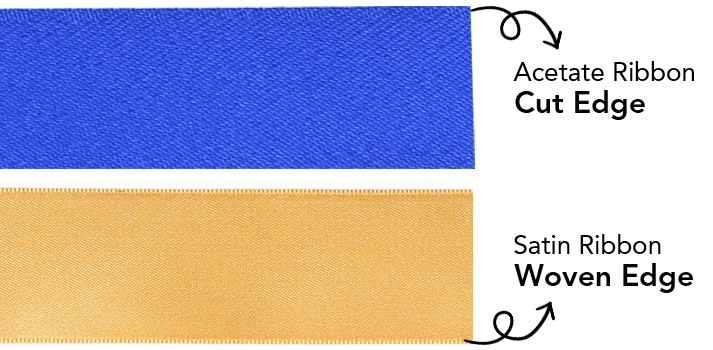
- Polyester satin (traditional satin ribbon): Locked edge / woven edge. Most standard satin ribbons are woven on narrow looms at their final width, producing a finished selvedge (locked edge) on both sides. This woven edge is soft, fabric-like, and prevents unraveling. It gives the ribbon a more traditional, premium feel but is generally more expensive to produce than cut-edge ribbon.
💡 Visual clue: Run your finger along the long edge of the ribbon. If it feels completely smooth, almost like melted plastic, it is likely cut-edge acetate. If it feels slightly textured, soft, and fabric-like, it is likely woven-edge satin (polyester or other fibers).
Material Origin
- Acetate satin: Derived from wood pulp (cellulose) from pine and eucalyptus trees. This is a renewable resource, and many acetate ribbons are certified biodegradable.
- Polyester satin: Derived from petroleum, a non-renewable fossil fuel. Polyester is a fully synthetic fiber that does not biodegrade.
Texture and Hand Feel
- Acetate satin: Has a stiffer, firmer structure compared to other satin ribbons. The ribbon is more rigid and holds its shape exceptionally well. Many users describe it as having a crisp, paper-like quality that makes it easy to shape into bows that stay put.
- Polyester satin: Offers a soft, silky feel that more closely mimics natural silk. It drapes fluidly and feels smooth to the touch.
Bow-Making Performance
- Acetate satin: Excels at creating large, voluminous bows that hold their shape without collapsing. The inherent stiffness means you can form substantial loops that stand up on their own. For large decorative bows, acetate is often the preferred choice. However, because it is stiff, acetate satin is not ideal for small, tied knots—it can be difficult to cinch tight without the ribbon bunching or folding awkwardly.
- Polyester satin: Produces softer, more flowing bows with a more delicate appearance. The ribbon drapes naturally, making it better suited for smaller bows, tied knots, and applications where a soft finish is desired.
🆕 Water Resistance (New Section)
- Acetate satin: Possesses a notable degree of water resistance. The acetate fiber is less hydrophilic (water-attracting) than polyester satin, meaning water does not readily soak into the ribbon. In a simple water drip test, when a drop of water is placed on acetate satin ribbon, the droplet remains beaded on the surface for a noticeable period. It typically takes around 30 seconds or more before the water even begins to penetrate the ribbon structure. This property makes acetate ribbon an excellent choice for floral arrangements stored in coolers, outdoor wedding decorations, and any application where brief exposure to moisture is expected.

- Polyester satin: Is significantly more hydrophilic (water-absorbent) than acetate satin. The surface and fiber structure allow water to spread and soak in very quickly. In the same water drip test, a drop of water placed on standard polyester satin ribbon will be nearly fully absorbed within 30 seconds, leaving a visible dark wet spot. This faster absorption means polyester satin is less suitable for environments with high humidity or direct moisture unless it has been specially treated.
💡 Practical takeaway: If your project involves floral coolers, fresh flowers (where stems may release moisture), or outdoor events where dew or light rain is possible, acetate satin’s superior water resistance gives it a clear advantage over standard polyester satin.
Durability and Care
- Acetate satin: Not suitable for garments or machine washing. Exposure to water and laundering can cause the ribbon to lose its shape, shrink, or become damaged. Keep acetate ribbon away from washing machines and prolonged moisture. It is also less durable overall than polyester.
- Polyester satin: More durable and resistant to wear. It can often withstand gentle machine washing (check product specifications) and holds up better under repeated handling.
Printability
- Acetate satin: Not ideal for printing. The smooth, non-porous surface does not hold ink as well as other ribbon types, and printed designs may have limited durability. This is an important consideration for custom-branded ribbons.
- Polyester satin: Excellent for printing. The surface accepts ink readily, producing vibrant, long-lasting prints. Polyester satin is the standard choice for custom-printed ribbons, logo ribbons, and promotional applications.
Eco-Friendliness
- Acetate satin: A biodegradable material made from renewable wood pulp. Under landfill conditions, acetate ribbon will biodegrade over time into humus and CO₂. Some acetate ribbons also carry OEKO-TEX® Standard 100 certification, which verifies that all components have been tested for harmful substances.
- Polyester satin: Non-biodegradable and petroleum-based. While it is durable and long-lasting, it does not break down naturally at the end of its life.
Cost
- Acetate satin: Generally more cost-effective than polyester satin for comparable applications, particularly for gift wrapping and decorative use where stiffness is an advantage. The lower cost, combined with good bow performance, makes acetate an economical choice for high-volume applications.
- Polyester satin: Typically slightly more expensive than acetate, with the added cost justified by its durability, softness, and superior printability.
What Is Acetate Ribbon Normally Used For?
Acetate ribbon is valued in situations where stiffness, shape-holding ability, water resistance, and a clean, finished edge are the priorities. Here are its most common applications:
Floristry and Wedding Arrangements
Florists rely heavily on acetate ribbon because it is easy to work with and holds beautiful, large loops in bows. The ribbon is also water-resistant and can be stored in floral coolers without wilting, fading, or bleeding due to moisture and humidity. This makes acetate ribbon the standard choice for wedding car ribbons, pew bows, and fresh flower arrangements.
Gift Wrapping and Packaging
The stiff structure of acetate ribbon makes it ideal for creating crisp, professional-looking bows on gift packages. It is widely used in retail gift wrapping, luxury packaging, and e-commerce order fulfillment. The ribbon maintains its shape during shipping and handling, ensuring that presentations remain attractive.
Homecoming Mums and Football Corsages
In regions where high school homecoming traditions involve large, elaborate “mums,” acetate ribbon is the go-to material. It is called a “cooler ribbon” because it withstands cold storage without losing its form or color. Its firmness allows for the structured, oversized bows these traditions require.
Craft Projects and DIY
Crafters use acetate ribbon for scrapbooking, card making, wreath construction, hair bows, and decorative accents. Because the edges are heat-sealed, there is no fraying to contend with—a significant advantage over many other ribbon types.
Event Decorations and Name Badges
The flat, stiff nature of acetate satin makes it particularly suited for name badge ribbons (volunteer ribbons, award ribbons, conference ribbons), bookmark ribbons, cake bands, sash ribbons, and cutting ceremony ribbons. The ribbon stays flat and doesn’t curl or twist, making it easy to read printed text (where printing is possible) or simply present a clean appearance.
Wedding Car Decorations
Acetate ribbon is a classic choice for decorating wedding cars. The ribbon’s ability to hold large, showy bows combined with its water resistance makes it perfectly suited for outdoor use, even in less-than-ideal weather.
When to Choose Acetate Ribbon vs Other Satin Ribbons
With this understanding, here’s a simple decision framework:
Choose acetate satin ribbon when you need:
- Large, voluminous bows that hold their shape
- Water resistance (floral coolers, outdoor use, fresh flower arrangements)
- Heat-fused, fray-resistant edges
- A more rigid, structured ribbon
- A cost-effective option for high-volume decorative use
- An eco-friendlier, biodegradable ribbon choice
Choose polyester satin ribbon when you need:
- Soft, silky, draping texture
- Custom printing (logos, text, patterns)
- Durability for repeated handling
- Machine-washable applications (garments, reusable decorations)
- Outdoor use with long-term exposure to elements
Keep in mind the limitations of acetate ribbon:
- Not suitable for garments or clothing
- Do not machine wash
- Limited printability (not recommended for custom printing)
- May not work well for small, tight knots (sticks to itself rather than cinching)
How to Identify Acetate Ribbon
If you’re shopping for ribbon and the label isn’t clear, here are a few clues:
- Check the edge finish. Acetate ribbon is most often sold as cut-edge ribbon. Run your finger along the edge—if it feels smooth and sealed rather than fuzzy, it’s likely acetate that has been heat-cut. True woven satin has soft, fabric-like selvedges.
- Feel the stiffness. Acetate satin is noticeably stiffer and more crisp than polyester satin. If the ribbon holds a sharp crease when folded and stands up firmly when shaped into a bow, it is probably acetate.
- Look for the telltale color and finish. Acetate ribbons often have a very bright, high-shine finish and are available in an exceptionally wide range of vivid colors.
- Check the product description. Reputable suppliers will specify the fiber composition. Look for terms like “100% acetate,” “acetate satin,” or “cut-edge ribbon.”
Caring for Acetate Ribbon
Acetate ribbon requires a bit of care to maintain its appearance:
- Do not wash. Acetate ribbon is not suitable for machine washing or even hand washing. Water can cause the ribbon to lose its shape and stiffness. (Note: While it has short-term water resistance, prolonged soaking is not recommended.)
- Spot clean only. If needed, gently dab with a slightly damp cloth and allow to air dry flat.
- Iron with caution. Acetate ribbon can be ironed to remove wrinkles. Use a low-to-medium heat setting (midway between nylon and polyester) and test on a small area first. Avoid high heat, as acetate can melt or become distorted.
- Store properly. Keep acetate ribbon away from excessive moisture and humidity. When stored in a cool, dry place, it will maintain its properties for extended periods.
- Expect some limitations. Acetate satin is not as durable as polyester satin and may show wear more quickly with heavy handling. For applications where the ribbon will be handled repeatedly (such as garment trim or reusable event decorations), polyester satin is the better choice.
The Bottom Line
Acetate ribbon is a unique and valuable material that occupies an important place in the ribbon world. It is not the same as all satin ribbons, but acetate satin is a distinct, popular, and highly functional type of satin ribbon made from wood-derived acetate fiber.
Its defining characteristics are stiffness, shape-holding ability, water resistance, and heat-fused cut edges. These qualities make it the ribbon of choice for florists, gift wrappers, crafters, and event decorators who need bows that hold their shape, ribbons that resist fraying, and a cost-effective, eco-friendlier alternative to fully synthetic options.
Understanding these differences empowers you to choose the right ribbon for your specific needs—whether you’re wrapping a single gift, planning a wedding, designing a product line, or buying wholesale for resale.
Looking for high-quality acetate satin ribbon for your next project? RibbonBuy offers a comprehensive selection of acetate ribbon in a wide range of colors and widths, perfect for floristry, gift wrapping, crafting, and event decorating. Explore our collection and find the perfect ribbon for your needs.